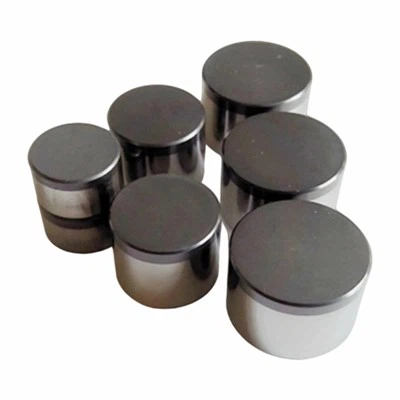
PDC tools (polycrystalline diamond composite tools) are key tools in oil drilling, geological exploration, and high-wear-resistant machining.Their quality stability and performance reliability directly affect operational efficiency, safety, and economy. Execution standards are technical guidelines that run through the entire chain of R&D, production, inspection, and application. They not only unify product performance indicators and testing methods but also provide objective basis for product interchangeability between different manufacturers, user selection, and industry supervision. A thorough understanding and strict adherence to relevant standards are prerequisites for ensuring that PDC tools perform as expected under complex working conditions.
PDC tool execution standards typically cover core aspects such as material and structural requirements, geometric dimensions and tolerances, mechanical performance indicators, environmental adaptability, and inspection rules. Regarding materials and structure, the standard specifies the purity, particle size distribution, and grain boundary bonding state of the diamond powder in the polycrystalline diamond layer to ensure the formation of a dense and strong cutting layer. It also sets limits on the composition (e.g., tungsten and cobalt content), density, and porosity of the cemented carbide matrix to guarantee sufficient supporting strength and impact toughness. The type and content of the bonding phase are also included in the specifications. Particularly for applications requiring high-temperature stability, the standard limits the amount of residual catalytic metal or mandates the use of low-catalytic/non-metallic bonding phases to suppress diamond graphitization.
Geometric dimensions and tolerance standards are crucial for ensuring tool interchangeability and assembly accuracy. This includes the diameter, thickness, crown profile shape (e.g., radius of curvature, taper angle), rake and clearance angle values of the cutting teeth, and the overall dimensions of the tool and the drill bit or tool holder (e.g., taper, thread specification). The tolerance range must balance machining feasibility and performance; too loose a tolerance will lead to assembly misalignment and uneven stress, while too tight a tolerance will significantly increase manufacturing costs. For multi-tooth cutting tools, the standard also specifies the phase difference between teeth and the uniformity of circumferential distribution to ensure uniform load distribution during rock breaking or cutting.
The mechanical performance indicators directly reflect the tool's service capability. Common test items include the microhardness of the diamond layer, wear resistance (e.g., relative wear resistance determined by wear ratio testing), bonding strength (e.g., evaluating interlayer bonding strength through pull-out or shear tests), and the bending strength and impact toughness of the cemented carbide matrix. For high-temperature applications, the standard introduces thermal stability tests (e.g., high-temperature friction and wear tests or differential scanning calorimetry) to verify the tool's performance retention rate at specified temperatures. These quantitative indicators provide users with comparable criteria for material selection under different working conditions.
Environmental adaptability standards focus on the tool's resistance to real-world operating environments, including corrosion resistance (e.g., resistance to chemical attack from drilling fluids or coolants), thermal shock resistance (resistance to cracking under simulated temperature changes), and long-term storage stability (e.g., moisture and oxidation protection requirements). The inspection rules clearly define the sampling methods, testing frequency, pass/fail criteria, and procedures for handling non-conforming products, ensuring that each batch of products meets the specified requirements.
It is worth noting that PDC tool standards include both internationally recognized specifications (such as API's series of standards for oil drilling bits) and specific standards developed by national or industry governments. Different application areas may emphasize different technical indicators. For example, PDC drill bit standards for drilling may emphasize impact resistance and thermal stability, while PDC tool standards for precision machining may focus more on dimensional accuracy and surface roughness control.
The significance of implementing standards lies not only in regulating production behavior but also in promoting technological progress and quality improvement. By following unified standards, companies can establish stable process routes and quality control systems, reducing performance fluctuations between batches; users can use standard data for scientific selection and lifespan prediction, reducing application risks; and the industry can use this to create a level playing field and promote the overall improvement of technological levels.
In summary, PDC tool implementation standards are comprehensive technical specifications covering materials, structure, performance, environment, and inspection, serving as the technological cornerstone for ensuring product reliability, interchangeability, and application safety. Against the backdrop of increasingly sophisticated high-end manufacturing and resource exploration, strict implementation and continuous improvement of the standard system will provide solid support for the innovative development and large-scale application of PDC cutting tools.