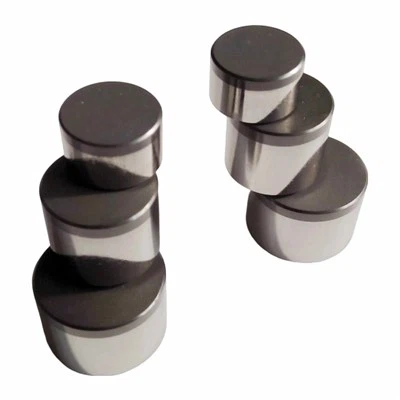
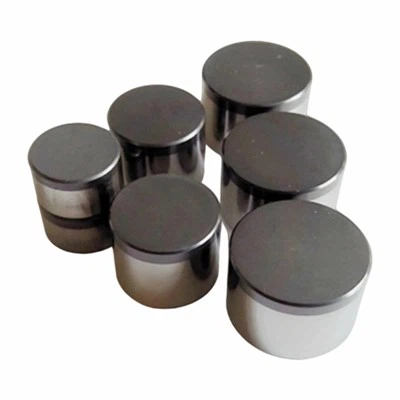
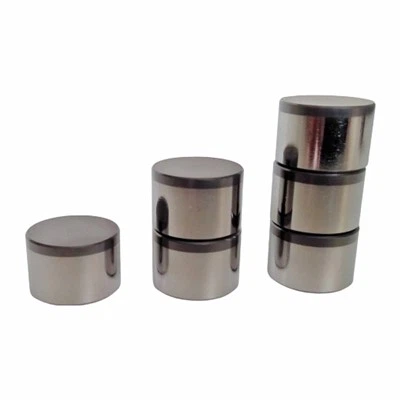
In the field of mining engineering, the performance and reliability of rock-breaking tools directly affect mining efficiency, cost control, and operational safety. PDC (Polycrystalline Diamond Composite) cutters, as rock-breaking elements integrating superhard materials and advanced composite processes, have established a crucial position in various mining scenarios such as coal mines, metal mines, and tunnel engineering, becoming a key support for promoting the upgrading of modern mining technology and achieving efficient and safe production.
Their importance is primarily reflected in their significantly improved rock-breaking efficiency. With a composite structure of polycrystalline diamond layers and a cemented carbide matrix, PDC cutters combine the ultra-high hardness of diamond with the toughness of cemented carbide, enabling low-energy, high-speed cutting in homogeneous, medium-hard, and even some hard and brittle ores through continuous shearing. Field applications demonstrate that, under common mineral and rock conditions such as medium-hard sandstone, shale, and limestone, its mechanical drilling speed is 2-5 times higher than traditional roller cone or insert carbide drill bits, significantly increasing the footage per hole. This substantially shortens the construction cycle of gas extraction holes, exploration holes, and tunneling roadways, improving equipment utilization and production pace.
Secondly, its economic value is highlighted by extended tool life and reduced overall costs. The excellent wear resistance of the diamond layer keeps the cutting edge sharp during prolonged operation, reducing increased cutting resistance and energy waste caused by wear. The carbide matrix effectively buffers the impact load from mineral interlayers, gravel, and fractures, preventing diamond layer breakage and extending drill bit replacement cycles. This means that in large-scale mining and deep-hole operations, non-productive time and auxiliary operation frequency are reduced, and material consumption and maintenance costs decrease simultaneously, bringing considerable economic benefits to enterprises.
Thirdly, enhanced adaptability to working conditions and operational stability ensure construction safety. Mining environments are often characterized by high temperatures, high humidity, dust, and complex geological structures. The thermal stability of PDC cutters (due to the high thermal conductivity and low coefficient of thermal expansion of diamond) can withstand performance degradation caused by high temperatures in deep holes. Their composite structure can withstand high-frequency impacts, and the flexible design of their geometry and array can better match the needs of different hole diameters, depths, and lithological variations, ensuring a regular borehole trajectory, reducing the risk of deviation and stuck drill bits, and mitigating safety hazards such as borehole collapse and water inrush caused by drill bit malfunctions.
Fourthly, they align with the concepts of green mining and sustainable development. Highly efficient rock breaking and low energy consumption reduce energy consumption and carbon emissions per unit of output; stable shearing and cutting reduce drill bit vibration, which is beneficial to surrounding rock stability, reducing the amount of support materials used and the disturbance to the ecological environment. The long lifespan and low replacement frequency of PDC cutters also help reduce the generation and disposal pressure of waste tools, conforming to the development direction of resource conservation and environmental friendliness.
Compared to roller cone drill bits, PDC cutters offer significant advantages in efficiency and lifespan in medium-hard and lower-hard ores; compared to single-carbide teeth, their wear resistance and thermal stability are more competitive; and compared to emerging superhard cutting tools, they exhibit superior resistance to rock breakage and reliable service in dynamic downhole impact environments.
In summary, the importance of PDC cutters in mining engineering lies in the organic unity of their high-efficiency rock breaking, long-term wear resistance, wide adaptability, and comprehensive economic and environmental advantages. They are not only a core tool for improving the speed and quality of mining operations, but also a strategic element for ensuring operational safety, reducing environmental impact, and achieving sustainable development, holding an irreplaceable position and broad application prospects in modern mining engineering.