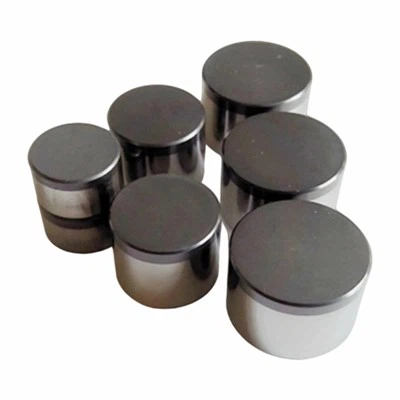
In modern high-end manufacturing, the widespread use of difficult-to-machine materials such as titanium alloys, nickel-based superalloys, carbon fiber reinforced composites, and high-silicon aluminum alloys places near-stringent demands on tool performance-they must withstand instantaneous high temperatures in the cutting zone, resist mechanical impact and chemical corrosion, and maintain long-term stable machining accuracy. While traditional polycrystalline diamond (PCD) excels in ultra-high hardness and wear resistance, it is limited by the risk of thermal decomposition above 300°C, making it difficult to meet the demands of extreme working conditions. The emergence of thermally stable PCD solutions, through a systematic design of material innovation, process optimization, and application adaptation, provides a feasible path to overcome this bottleneck.
The core of thermally stable PCD solutions lies in reconstructing the material's synergistic tolerance to heat, force, and chemical degradation. Its material design abandons the highly catalytically active metal-bonded phases (such as cobalt and nickel) found in conventional PCD, instead employing ceramic or carbide-based non-metallic bonded phases (such as silicides and borides). This suppresses the phase transformation reaction from diamond to graphite at its source, raising the thermal decomposition temperature to over 700℃. Simultaneously, by precisely controlling the particle size distribution and sintering process of diamond microparticles, a dense and uniform three-dimensional network structure is formed. This retains the covalent bond strength and toughness of single-crystal diamond while dispersing thermal stress and mechanical impact through the grain boundary network, preventing the propagation of microcracks caused by localized high-temperature concentrations. Vacuum annealing or protective atmosphere heat treatment in the post-processing stage further deactivates or migrates residual catalytic metals to non-critical areas, significantly enhancing oxidation resistance and thermal fatigue resistance. This end-to-end optimization from raw materials to finished products allows the material to maintain cutting edge sharpness and structural integrity even under multi-field coupling conditions of high temperature, high load, and strong corrosion.
For specific processing scenarios, the thermal stability PCD solution emphasizes deep adaptation between "process-tool-condition". In the machining of titanium alloy components for aerospace applications, by matching lower cutting speeds and moderate feed rates, combined with a directional jet cooling and lubrication strategy, the cutting zone temperature can be stably controlled below 600℃, avoiding tool adhesion wear caused by thermal softening. In the application of superhard composite drill bits in the energy equipment field, their resistance to thermal fatigue resists downhole cyclic thermal stress, and with optimized tooth layout design and impact load buffering structures, the risk of chipping is effectively reduced. For the precision stamping of silicon steel sheets for new energy vehicle motors, the low coefficient of thermal expansion and thermal shock resistance ensure consistent dimensional accuracy under high-speed cutting, reducing the scrap rate of molds caused by thermal deformation. Furthermore, the solution also covers the entire tool lifecycle management, including wear prediction models based on machining data, professional regrinding process specifications, and standardized inspection procedures, forming a closed-loop support system from selection and use to maintenance.
The value of thermal stability PCD solutions lies not only in extending the life of individual tools-a practice at an aerospace manufacturing company shows that titanium alloy end mills using this solution have a lifespan more than four times longer than those using conventional PCD, and machining efficiency is increased by 30%-but also in providing fundamental support for high-end manufacturing to break through "machining forbidden zones." With advancements in synthesis technology and intelligent monitoring, future solutions will further integrate digital simulation and adaptive machining technologies to achieve real-time optimization of cutting parameters and accurate prediction of tool conditions, driving precision manufacturing towards more complex and demanding fields.