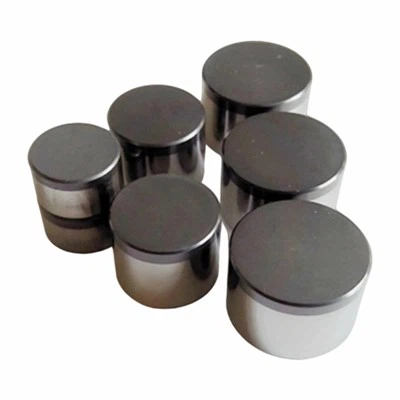
In the world of hard rock mining, the efficiency of rock fragmentation is the heartbeat of the entire operation. When facing complex geological formations characterized by extreme hardness and high abrasiveness, traditional tungsten carbide picks often fall into a "vicious cycle" of rapid wear, frequent replacements, and plummeting efficiency. As a next-generation excavation tool, Diamond Picks (PDC Picks) are fundamentally reshaping mining logic with a disruptive approach.
1. Product Profile: Hardcore Construction & Core Technology
Diamond picks are crafted injecting the best of material science into picks. Check out how's PDC (aka Polycrystalline Diamond Compact) technology rock solid:
1).Multi-layer Gradient Structure:
The top layer consists of a PDC layer with hardness second only to natural diamond, while the base provides high-toughness tungsten carbide. This dual-layer design solves the industry paradox of "maximum hardness vs. impact resistance."
2).High-Strength Steel Body:
Crafted from premium alloy steels like 42CrMo and processed through vacuum heat treatment, the body is engineered to withstand immense lateral cutting forces without fracturing.
3)Inherent Self-Sharpening Design:
Every time diamonds are worn down to micro level, new cutting edges are revealed. Puts it simple, the pick never runs dull during its life-cycle. Talking points you can never hear from carbide picks.
2. Operational Edge: The "Hard Rock Nemesis"
Metal mines-typically iron, copper, or gold-are often surrounded by granite or quartzite with a Protodyakonov hardness coefficient () ranging from 10 to 18. In these extreme conditions, diamond picks offer absolute advantages:
1).Generational Gap in Lifespan:
If working at the same level, the service life of diamond picks would be 5 to 10 times that of carbide picks. Yes, you read it right. Not spending half of your shift changing picks is enough reason why you should make the switch.
2).Constant Cutting Efficiency:
While ordinary picks suffer a sharp drop in productivity as they dull, diamond picks remain sharp throughout their lifecycle, keeping roadheaders and continuous miners at peak advance rates.
The better the thermal conductivity of the material, the quicker it dissipates heat generated by friction. Once the pick tip gets too hot, it will either fall off or soften the carbide underlayer.
3. Deep ROI & Economic Analysis
While the initial unit price is higher, diamond picks offer an extraordinary economic return when viewed through the lens of LCC)
|
Comparison Metric |
Traditional Tungsten Carbide Pick |
Diamond (PDC) Pick |
Long-term Value Assessment |
|
Replacement Cycle |
Multiple times per shift |
Continuous use for days/weeks |
70% reduction in downtime costs |
|
Advance Rate |
Decreases as tool wears |
Remains high consistently |
25%+ increase in total output |
|
Energy Consumption |
High (friction increases as it dulls) |
Low (minimal resistance) |
15%-20% energy savings |
|
Labor Intensity |
Extremely high (frequent changes) |
Extremely low |
Improved underground safety |
Conclusion: Diamond picks have been proven in field tests conducted in hard-rock metal mines to decrease the all-in mining cost / ton by an average of 30% - 45%.
4. Customization Services
No two mines are identical. We provide bespoke solutions based on specific rock lithology (hardness, abrasiveness, and integrity):
Interface Customization:
We offer flat-faced inserts for brittle rock and ridged or wavy interfaces for high-impact strata to enhance anti-chipping performance.
Formula Optimization:
By adjusting the grain size distribution of the diamond powder, we strike the perfect balance between "wear resistance" and "impact toughness."
Specification Matching:
Our products are compatible with major global brands like Sandvik and Joy, supporting OEM production for non-standard sizes.
Expert Consultation
If you are facing challenges in metal mining ?or require professional advice on optimizing your excavation efficiency, please contact us. Our team of experts is ready to provide you with comprehensive, data-driven solutions.
FAQ
Q: Since the unit price of diamond cutters is so high, is it really cost-effective to replace them?
A: Indeed, diamond (PDC) cutters are much more expensive than alloy ones when purchased. But the account cannot only look at the purchase price, it must be calculated as the 'comprehensive mining cost'. Ordinary cutters will become bald after half a day in hard rock. You have to stop the machine and have the workers replace them. This stoppage will result in machine rent, labor costs, and schedule losses all in money. The lifespan of diamond cutting teeth is 5 to 10 times that of others, and the cost per ton of ore can be reduced by 30% to 45%. Simply put, it is' expensive to buy, cost-effective to use '.
Q: Will it easily shatter (shatter) in hard rock?
A: Answer: This is a misconception among many people that diamonds are hard but brittle. In fact, our PDC cutters use a "gradient structure": the diamond layer on the head is responsible for wear resistance, and the hard alloy layer below is responsible for shock absorption. And for mining layers with particularly high impact forces, we also have "wave shaped" or "ridge shaped" interface designs specifically designed to cushion impacts. As long as the model is selected correctly and the parameters are adjusted properly, it can carry more hard work than ordinary cutters.
Q: What is the principle of 'self sharpness'? Is it really not necessary to sharpen the knife?
A: It's really not necessary. Ordinary alloy teeth become dull after being rounded and must be replaced. The microstructure of diamond cutting teeth is very interesting. When cutting rocks, the small particles on the surface wear and fall off, naturally exposing new and sharp edges and corners below. So as long as it is still working, it will always be sharp, and the cutting efficiency will not fall off just because it has been dry for a long time.
Q: Do these cutters have any special requirements for my tunneling machine?
A: Basically, mainstream tunneling machines (such as Sany, Shanhe Intelligence, or foreign brands like Sandvik and Jiuyi) can be directly installed. However, there is a little trick: diamond cutters rely on "shearing" to break rocks, without the need to push inward like alloy teeth. So when using diamond teeth, the pushing pressure can be appropriately reduced and the speed can be increased, which not only breaks rocks quickly, but also protects the hydraulic system and motor of the machine.
Q: The rock conditions on the mine are always changing. Can your product handle it?
A: The mineral layers are indeed ever-changing, some rocks are particularly hard but brittle, while others are extremely abrasive. We do not sell 'jack of all trades', we provide customized solutions. For example, if the rock is too hard, we adjust the proportion of diamond particle size; If the impact is large, we will thicken the anti impact layer. We will use the geological report or on-site rock samples you provide to specially prepare a "formula" for the cutting teeth, achieving a tailored solution for each mine.