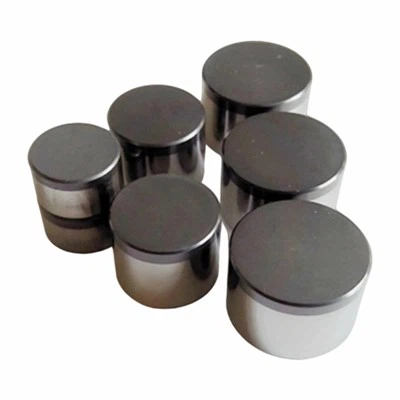
PDC tools (polycrystalline diamond composite tools) play a crucial role in oil drilling, geological exploration, and machining of highly wear-resistant materials due to the high hardness of their surface polycrystalline diamond layer and the good toughness of their underlying cemented carbide layer. However, maintaining their excellent performance relies heavily on scientific and standardized maintenance. Neglecting maintenance can not only accelerate tool wear and structural failure but also reduce operational efficiency, increase non-productive time, and raise overall costs. Establishing a standardized maintenance process covering the entire usage process is the core guarantee for ensuring the long-term stable operation of PDC tools.
The first step in maintenance is pre-operation inspection and pretreatment. Before each installation, the tool's appearance should be carefully inspected to ensure that the diamond layer is free of cracks, chips, localized detachment, or obvious wear marks, and that the cemented carbide matrix is free of deformation, cracks, and corrosion. The cleanliness of the mating surfaces should be checked to avoid residual rock chips, oil stains, or coolant crystals affecting clamping accuracy. During clamping, ensure the coaxiality and clamping force of the cutting tool and drill string or tool holder meet technical requirements to prevent swaying or loosening that could cause localized load concentration and premature diamond layer peeling. For multi-tooth cutting tools, verify the consistency of the height and angle of each cutting tooth to ensure uniform force distribution.
Process maintenance during operation is equally important. During drilling or machining, key parameters such as drill pressure, rotational speed, torque, vibration, and cutting zone temperature should be monitored in real time according to the working conditions. If abnormal fluctuations are detected, immediately analyze the cause and take measures such as reducing parameters, suspending operations, or removing the drill string for inspection to avoid irreversible damage caused by continuous abnormal loads. For drilling operations, maintain unobstructed circulation of drilling fluid or coolant, and adjust its density, viscosity, and flow rate appropriately according to formation characteristics and temperature conditions to effectively carry cuttings or rock fragments, reduce cutting zone temperature, and minimize the risk of chemical corrosion. In machining applications, use a low-residue, chemically inert coolant compatible with diamond, ensuring the spray direction covers the entire cutting zone to prevent medium decomposition at high temperatures from damaging the tool surface.
Post-operation cleaning and inspection are crucial maintenance steps. After operation, promptly remove any rock chips, oil, shavings, and coolant residue from the tool surface. It is recommended to use a soft-bristled brush and a neutral detergent to avoid scratching the diamond layer with hard scrapers. After cleaning, inspect the bonding condition between the diamond layer and the substrate under a stereomicroscope or imaging system to assess the wear pattern (e.g., uniform wear, localized chipping, thermal cracking) to determine if regrinding or replacement is necessary. Record the inspection data to provide a basis for subsequent maintenance cycles and parameter optimization.
Storage and protective management directly affect the reusability of the tools. Tools should be stored in a dry, dark, and temperature-controlled environment, with relative humidity ideally below 40% to prevent moisture absorption by the substrate or oxidation of the diamond layer. Tools of different specifications and models should be categorized, labeled, and stored separately using dedicated anti-collision tool cases or clamps to prevent drops and impacts during handling. Tools stored for long periods can be coated with a thin layer of anti-rust oil or vacuum-packed to isolate them from air and moisture.
Regular regrinding and life management are extensions of maintenance. When the diamond layer wears to a preset threshold (e.g., an increased cutting edge radius affecting machining accuracy or a significant decrease in rock-breaking efficiency), it should be regrinded by trained professionals under controlled conditions. Appropriately sized diamond wheels should be selected, and cooling and heat input should be strictly controlled to prevent thermal damage to the thermally stabilized layer or alteration of the tool's geometric accuracy. After regrinding, dimensions and geometric tolerances must be re-inspected to ensure compliance with usage standards before the tool can be reused.
In summary, PDC tool maintenance should encompass the entire process, including pre-installation inspection, in-operation monitoring, post-operation cleaning and inspection, proper storage, and regular regrinding. Only by establishing and implementing a standardized maintenance system can tool performance degradation be slowed down to the maximum extent, the probability of unexpected failures reduced, and the safety, stability, and efficiency of operations ensured, creating sustainable economic and technological value for resource exploration and development and high-wear-resistant machining fields.