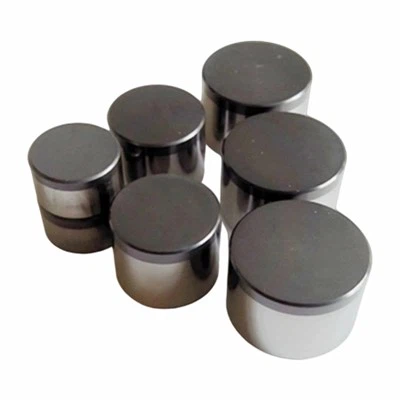
In the exploration and development of oil and gas, the efficiency and quality of drilling operations largely depend on the performance of rock-breaking tools. Polycrystalline diamond composite (PDC) cutters, as key components of modern drilling bits, have become indispensable in diverse scenarios due to their unique material advantages and working mechanisms, serving as a crucial driving force for drilling technology advancement.
The primary application of PDC cutters is to improve drilling efficiency in various formations. Their surface polycrystalline diamond layer possesses ultra-high hardness and wear resistance approaching that of natural diamond. Combined with a continuous scraping rock-breaking method, it can achieve high-speed cutting with low energy consumption in soft to medium-hard formations (such as shale, mudstone, and loose sandstone), significantly increasing the rate of penetration (ROP) and shortening the single-well drilling cycle. In homogeneous formations, PDC cutters can remove rock cuttings with a stable cutting trajectory, reducing energy loss from repeated crushing. This ensures sufficient footage while reducing drilling fluid circulation and power consumption, optimizing operational economics.
Facing the challenges of complex geological conditions, the application of PDC cutters extends to enhancing drill bit adaptability to formations. Depending on the physical and mechanical properties of different lithologies, customized rock-breaking strategies can be achieved by adjusting the cutter's geometric parameters (such as shape, diameter, diamond layer thickness, and cutting edge height) and layout: in hard and brittle formations (such as limestone and dolomite), thick diamond layers and small-diameter cutters are used to improve impact resistance and wear resistance; in soft plastic formations, thin diamond layers and large-diameter cutters are selected to improve cutting efficiency. Furthermore, multi-shape combination cutter arrays can collaboratively address heterogeneous formations such as interlayers and alternating layers, reducing drill bit wear and vibration, and maintaining a smooth and regular wellbore trajectory.
PDC cutters also play a crucial role in reducing overall drilling costs and extending drill bit life. Compared to traditional roller cone drill bits that rely on impact-crushing rock breaking, the shearing rock breaking mechanism of the PDC cutter reduces impact fatigue damage to the drill bit. Combined with the wear-resistant properties of the diamond layer, this significantly increases the footage per drill bit and reduces the frequency of replacement. This not only reduces the number of tripping operations and related auxiliary work time but also minimizes non-productive time losses caused by frequent drill changes. Its economic benefits are particularly prominent for high-volume projects such as deep wells, ultra-deep wells, and cluster wells.
In special operating scenarios, the application of the PDC cutter is further expanded to directional drilling and special process wells. Its stable cutting performance and predictable rock-breaking trajectory help control the wellbore direction and build-up rate, meeting the engineering requirements of horizontal wells and extended reach wells with high trajectory accuracy requirements. In special processes such as underbalanced drilling and gas drilling, the PDC cutter can maintain efficient cutting under lower drilling pressure and rotational speed conditions, reducing the risk of wellbore instability and ensuring operational safety and reservoir protection.
Overall, PDC cutters for oil and gas applications span multiple stages, from conventional drilling to complex engineering. They are not only core components for improving rock-breaking efficiency but also key tools for addressing diverse geological conditions, optimizing operational economics, and supporting advanced drilling technologies. Their application has not only reshaped the boundaries of drilling capabilities in hard rock formations but also provided solid technical support for the efficient development of oil and gas resources and the continuous expansion of exploration depth.