


On December 4, 2025, Washington time, the final ruling of the International Trade Commission (ITC) poured cold water on China's superhard materials industry across the Pacific Ocean. Iljin, SF Diamond, New Asia IDS, Haimingrun, Juxin, CR Gemstone, Jingrui, Wanlong - these names were clearly listed in the ruling, and their polycrystalline diamond composite (PCD) products were found to infringe on US patents. Subsequently, there were limited exclusion orders for some companies and a prohibition order against SF Diamond USA, Inc., a US company. This means that the related products are blocked from entering the US market.
Behind the cold list lies the real pains of the enterprise. In the workshop of Henan Sifangda, the technical supervisor Lao Zhang repeatedly rubbed a newly produced composite sheet: "The core of the US Synthetic patents lies in the interface structure and heat-resistant layer design, and we have indeed worked hard around them. "His voice carried a hint of exhaustion. In Zhengzhou, the export department of New Asia Composite Materials has held a meeting overnight to discuss how to re plan the order gap after being excluded from the US market.
Going back in time to that winter five years ago. On December 11, 2020, US Synthetic, a Utah based company, dropped a "bombshell" on the ITC, accusing multiple global companies of infringing on its five key patents, including the "diamond particle bonding technology" numbered 9932274 and the "high-temperature and high-pressure substrate bonding process" numbered 10507565. Just ten days later, ITC officially launched the 337-TA-1236 investigation, and the battle began.
This storm swept over ten Chinese companies. From Henan Sifangda Superhard Materials, Wuxi Element Six Hard Alloy, to Shanghai Iljin, Shenzhen Haimingrun, Fujian Wanlong New Materials, the list is suffocating. The storm even affected companies in countries such as the UK, Germany, Japan, and South Korea. Beijing Fucheng Diamond chose to compromise as early as March 2021, signing an agreement to withdraw in disappointment, becoming the first figure to fall in this lengthy lawsuit.
Diamonds are no longer as simple as grinding wheels and glass knives. At a precision instrument factory in Shenzhen, an engineer pointed to a machining center that was in operation and said, "PCD cutting tools cannot turn aluminum alloy mirrors without them. "This material supports the hard cutting teeth of oil drill bits, is the core tool on precision lathes, and is also the precision cutting blade in semiconductor packaging - the cornerstone of modern industry is built on these small and hard composite pieces.
The patent barriers of US Synthetic did not come out of thin air. The patent number 8616306 it holds describes a method of reducing thermal damage to diamond layers by cobalt catalysts, which is crucial for improving the lifespan of PCD in deep well drilling. When the export samples of Henan Jingrui New Materials were accused of infringing on the patent in 2022, their engineers initially believed that it was only a difference in process details. Our sintering curve and pressure gradient are indeed different, but the other party insists that the key parameters fall within the protection range, "said a technician from Jingrui who declined to be named.
This is not an isolated incident. Three years ago, another top Chinese company faced a temporary ban in the European market due to a similar patent dispute. The overseas sales director of Shenzhen Haimingrun still remembers this vividly: "Every exhibition, the opposing lawyer follows like a shadow, taking product catalogs and recording technical parameters." The game of intellectual property has become a norm in the industry.
At the Wanlong New Materials factory in Quanzhou, the technical deputy station is in front of the inspection table, and several composite sheets with metallic luster are undergoing laser scanning under the light. Our latest cobalt free bonding phase technology route theoretically can avoid their 9315881 patent, "he picked up a piece," but the market cannot afford the research and development cycle. "In the laboratory of Juxin New Materials in Guangdong, engineers are trying to break through the patent blockade with nano twin structure. The progress chart on the wall shows that the pilot sample is expected to complete full testing in the first quarter of 2026.
Behind the smoke of the patent war lies the change of industrial status. Ten years ago, the global high-end PCD market was almost monopolized by American and European companies. Nowadays, the proportion of PDC drill bits made in China in Middle Eastern oil fields has exceeded 40%, and the penetration rate of precision cutting tools in European automotive factories is steadily increasing. This upward trend has touched the sensitive nerves of traditional giants.
The choice of Section 337 by US Synthetic has profound implications. "A lawyer who has been representing intellectual property cases between China and the United States for a long time analyzed that "unlike local court litigation that only targets individual companies, ITC's exclusion order can block the entire product category at once. "This strategy directly points to the collective path of Chinese enterprises going global.
At a material factory in Dongguan that provides substrates for multiple companies involved in the case, the manager pointed to the packaged tungsten steel bases in the warehouse and said, "These were originally scheduled to be sent to assembly plants in Jiangsu and Henan next week, but now the customers are requesting a delay." The ripple effect is spreading along the industrial chain. On the other side of the ocean, in the procurement department of Houston Oilfield Services, engineers began evaluating the delivery cycles and costs of alternative suppliers from South Korea and Ireland.
This ruling is like a hanging sword. It forces Chinese companies to accelerate their sprint on the single plank bridge of technological research and development - either finding innovative paths that bypass patent barriers or engaging in lengthy and expensive legal battles. In a research and development building in Zhengzhou High tech Zone, several technical backbones of enterprises are sitting together in a rare way, discussing the possibility of jointly building a patent analysis sharing pool.
The battlefield of diamonds has no gunpowder, but it determines the hardness of modern industry. When patents become the new weapon of technological hegemony, Chinese manufacturing can only carve out its own living space with sharper innovation - this competition over hardness will ultimately reshape the underlying logic of global industrial competition.
ITC Ruling Ignites Diamond War: Chinese Companies Break Through Key Technology Blockade
Popular Products

High Wear-Resistance PDC Diamond Cutter
1. This series PDC cutter made by ultra-high pressure pressing technology that enhances the covalent bond strength of

Mirror PDC CUTTER For Extremely Soft Coal Seams
DQ DIAMOND Mirror PDC Cutter: Specially designed for extremely soft coal seams ($<10$ MPa). With Ra0.02 mirror
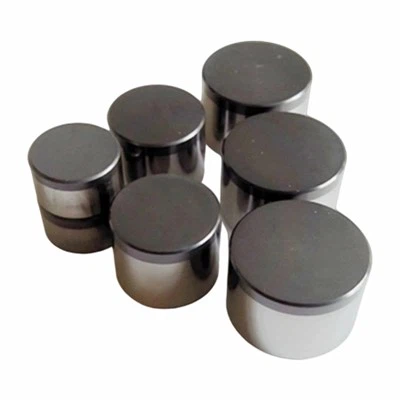
PDC Oil Gas Bit Cutter
1.High impact resistance and wear resistance. 2.Innovative synthesis process enhances diamond toughness. 3.The

Polycrystalline Diamond Cutter
At the beginning of the new century, Polycrystalline Diamond Cutter PDC bits accounted for only 20% of global bit

Triple-ridged Benz PDC Cutter
1.Structural design improves drilling efficiency and lifespan. 2.Reduces stick-slip risk during deep drilling. 3.High

Stinger Conical PDC Cutter
1. Ultra-thick polycrystalline diamond layer. 2. Highly efficient rock fracturing. 3. Optimized load distribution,