Road Milling
In the road maintenance and upgrading of asphalt concrete pavements, road milling machines play a crucial role. Their core task is to precisely and efficiently remove old or damaged pavement layers, creating an ideal base surface for subsequent repair or repaving. Road milling teeth (also known as milling machine cutters or planning teeth) are the teeth of the milling machine, and their performance directly determines the overall performance of the road milling machine.
This article will focus on this key consumable, analyzing the challenges faced by traditional alloy milling teeth and explaining why diamond milling teeth are becoming a more advantageous choice in asphalt pavement maintenance projects.
I. Road Milling Teeth: The Core of Milling Machine Efficiency
Road milling teeth are the core cutting elements on the milling machine drum. Their typical structure includes a top carbide cutting head, a central steel tooth body, and retaining rings and clips for fixing and cushioning. This modular design makes replacement quick and easy after wear.
• Core Function:
Milling teeth are a crucial component of the milling machine, directly contacting the road surface material, typically asphalt concrete or cement concrete, and peeling away the surface layer through rotary cutting. The performance of the milling teeth not only affects the efficiency of the milling operation but also determines the smoothness and texture quality of the working surface, and even impacts the service life of other components of the machine.
• Wide Range of Applications:
- This encompasses the process of resurfacing asphalt across various infrastructures, including highways, urban roadways, airport runways, and logistics centers.
- Furthermore, it entails resolving surface imperfections such as ruts, undulations, fissures, and tire markings on pavement.
- The scope also covers the excavation of potholes and diverse trench work.
- This involves enhancing the texture of concrete pavements and rectifying surface irregularities through milling.
- It can be said that any maintenance or new construction project that requires the precise removal of a certain thickness of road surface material relies heavily on efficient and durable road milling teeth.
II. Traditional Tungsten Carbide Road Milling Teeth
For a long time, carbide has been the mainstream material for milling tooth tips, mainly due to its high hardness and moderate toughness, making it stable and reliable in road construction. Currently, these carbide milling teeth are widely adaptable to various milling operations, with common specifications being 20mm and 22mm shank, compatible with most mainstream domestic and international milling machines on the market.

1.Abrasive Wear
However, with increasing demands for construction efficiency, cost control, and milling quality, the shortcomings of carbide teeth are gradually becoming apparent. First, abrasive wear is the most common type of failure. Hard minerals in the road surface, such as quartz sand, continuously wear down the tool tip during high-speed cutting, causing grooves on the surface, shrinkage in size, and a shortened lifespan. This not only affects work efficiency but may also lead to uneven milling depth, thus affecting the surface layer quality.
2. Impact Fatigue & Micro-Chipping
Second, the large amount of impact force during milling, especially when encountering reinforcing steel, stones, or hard base layers, easily causes micro-chipping and cracks at the tool tip edge. These micro-damages are the source of fatigue failure; as cracks propagate over time, they may eventually lead to tool breakage.
3. Thermal Fatigue & Oxidation
In high-speed milling, friction between cutting teeth of road can raise the temperatures at contact points to several hundred degrees Celsius. The thermal cycle caused by repeated contact raises stress within the alloy, causing microcracks to develop. Heat also accelerates surface oxidation of the alloy, producing a bluish oxide layer that causes a decrease in hardness and toughness, resulting in increased wear and deformation.
4. Adhesive Wear
Under high temperature and pressure; the asphalt may soften and adhere to the cutting edges. Then, as the stick layers are removed, scraps of the alloy are carried with them, blunting the cutting edges and thereby diminishing their efficiency.
5. Corrosive Wear
Furthermore, when the milling is performed in humid environment or on salty surface, the presence of moisture and electrolytes accelerates the corrosion process on the teeth. The corrosion process, in combination with abrasive wear, results in greater tool damage and a shorter tool life. In other words, despite their wide use and importance in the field, the internal weaknesses and frequent failure mechanisms of the carbide milling teeth clearly demonstrate the necessity and the urgency to always search for better solutions and materials in order to go towards more efficient and economical construction processes.
III. Diamond Road Milling Teeth: Performance Breakthrough, Significant Advantages

Facing the limitations of alloy teeth, polycrystalline diamond (PCD) has revolutionized the road milling industry with its superior physical properties. Diamond road milling teeth using PCD as the cutting tip exhibit significant advantages:
PCD material has the advantage over tough abrasives such as quartz with a Mohs hardness value of 10. During milling the PCD tips are rarely scored by aggregates, which considerably slows down the wear. In milling on homogeneous asphalt pavements the PCD teeth can last about 5 to 10 times as long as alloy teeth, which reduces the interval between replacements and leads to less equipment downtime. Simultaneously, the little wear along the length of the cutting edge allows for a constant milling depth and surface texture, thereby improving construction quality.
Diamond is one of the best known materials for thermal conductivity, rapidly conducting and dispersing the high temperatures in the cutting zone. This results in a 40% to 60% lower operating temperature for the cutting teeth compared to alloy cutting teeth, effectively reducing the risks of thermal fatigue, oxidation, and adhesive wear, ensuring the stability of the cutting tooth performance.
The coefficient of friction of the PCD cutting tooth's smooth surface is one-third that of the alloy cutting teeth, so the adhesion between cutting teeth and road surface is decreased. Cutting resistance is decreased by about 20% to 30%, making the machine run smoother, and the feed rate can be increased (for example, from 5 m/min to 7 m/min), improving construction efficiency. At the same time, the decrease of friction will decrease fuel consumption and load on equipment, reducing operating cost and prolonging the life of the main unit.
Modern PCD milling teeth employ a composite structural design that not only replaces the cutting tip but also includes: a top PCD cutting tip providing superior wear resistance; a middle tough transition layer effectively buffering impact loads and protecting the PCD layer from damage; a robust carbide base ensuring overall stability; and a chip-breaking notch effectively preventing erosion of the base. This design retains the wear resistance advantages of PCD while significantly improving impact resistance, broadening its application range, and enhancing reliability.
With rising alloy prices, the price of a single PCD milling tooth is approaching that of alloy teeth. However, its significantly longer lifespan means a substantial reduction in the number of tools required, maintenance and replacement frequency, downtime, and labor costs for the same workload. Considering the overall unit construction cost, PCD milling teeth can potentially reduce costs by approximately 30% to 50%, demonstrating high cost-effectiveness. This economic advantage is particularly pronounced in scenarios requiring high precision and efficiency, such as surface repair (thickness less than 10 cm) and ultra-fine milling.
Currently, globally renowned road milling tooth suppliers such as WIRTGEN GROUP, SLB, Kennametal, and E6 have launched diamond road milling tooth products. This not only indicates the maturity of the technology but also reflects the increasing market recognition and acceptance of its applications.
IV. Henan Deqin New Materials: Explorer and Promoter of Diamond Milling Tooth Technology
In the wave of technological upgrades in road maintenance materials, Henan Deqin New Materials Co., Ltd. (DQ Diamond) is one of China's leading enterprises specializing in the research and development and manufacturing of high-performance diamond tools. The company deeply understands the urgent need for high-efficiency, low-cost, and high-quality tools in current road construction and is committed to applying the superior performance of diamond materials to the field of road milling.
The core of DQ DIAMOND' diamond road milling teeth lies in its innovative polycrystalline diamond composite (PCD) tip technology:
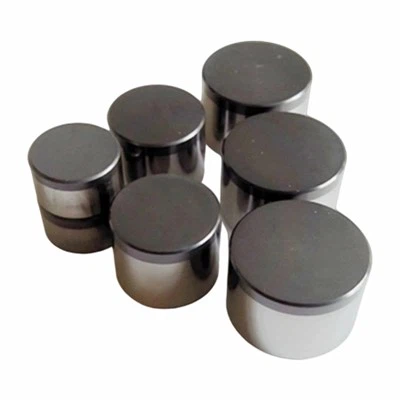
- This tool's structure consists of multiple parts, including the tooth base, the road tooth steel body (i.e., the tooth body), the cemented carbide base, and the top PCD cutter. The PCD composite sheet is fabricated through sintering micro-diamond particles and binders on to a cemented carbide substrate by a high-temperature high-pressure process. The composite material possesses the ultra-high hardness and wear resistance of diamond and the toughness and weldability of cemented carbide.
- When it comes to design, PCD cutting tips can be crafted into a variety of shapes, including conical, spherical, or parabolic, with diameters usually falling between 5 and 30 millimeters. This versatility allows for fine-tuning to cater to different cutting requirements and enhance overall cutting performance. Simultaneously, the tool emphasizes the structural design of the buffer layer, such as using a specific carbide base or transition material, to better absorb and disperse impact forces, protecting the PCD layer and thus enhancing overall impact resistance and service life.
- Furthermore, the design incorporates optimized chip breaking notches, effectively protecting the carbide base from excessive wear. This multi-layered structural design brings several significant advantages: First, the PCD cutting tip greatly improves wear resistance, significantly extending service life; second, the low-friction design reduces cutting resistance, and combined with optimized tooth profiles, it improves milling speed and work efficiency; third, the composite structure plus the buffer layer gives the tool strong impact resistance under complex working conditions; finally, the combination of long service life and high efficiency significantly reduces unit operating costs, which is particularly important given the current general rise in the price of high-alloy materials, enhancing overall market competitiveness. • High Adaptability: Available in Φ20mm and Φ22mm sizes, compatible with mainstream milling machines. Deloitte New Materials' diamond road milling teeth are particularly suitable for precision milling and surface repair of homogeneous asphalt pavements, making them an ideal choice for achieving high-quality, high-efficiency, and low-overall-cost road maintenance.
With increasingly stringent road maintenance standards and a greater emphasis on economic efficiency, the disadvantages of traditional carbide milling teeth under multiple failure modes and cost pressures are becoming increasingly apparent. Polycrystalline diamond (PCD) road milling teeth, with their excellent wear resistance, excellent thermal conductivity, high efficiency due to low friction, and optimized impact-resistant structure, offer an excellent solution to these problems. Especially given the current high price of carbide, their long lifespan and low overall cost advantages are even more prominent. DQ DIAMOND's continuous innovation is driving the maturity and widespread adoption of this technology.