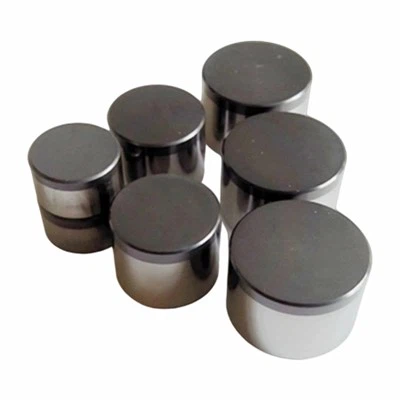
PDC tools (polycrystalline diamond composite tools) offer highly efficient cutting and rock-breaking capabilities in oil drilling, geological exploration, and the machining of high-wear-resistant materials due to the combination of the high hardness of the outer diamond layer and the good toughness of the underlying cemented carbide layer. However, to fully realize their performance advantages, it is essential to follow scientific and standardized operating methods, covering aspects such as installation preparation, parameter setting, process monitoring, and maintenance, to reduce the risk of abnormal wear and sudden failure, ensuring operational safety and economic efficiency.
Preparation before operation is fundamental to ensuring the normal operation of PDC tools. First, inspect the tool's appearance to confirm that the diamond layer has no obvious cracks, chips, or separation at the interface, and that the cemented carbide matrix is free from deformation or damage. During installation, ensure that the coaxiality and tightening force of the tool and drill bit or tool holder meet the specifications, avoiding localized load concentration caused by wobbling or loosening, which can lead to premature peeling of the diamond layer. For multi-tooth tools, check the installation angle and height consistency of each cutting tooth to ensure uniform force distribution.
Parameter settings must be reasonably matched based on the characteristics of the working conditions. During drilling operations, appropriate drill pressure, rotation speed, and pump displacement should be determined according to the hardness, abrasiveness, and drillability index of the formation rock. Generally, in medium-soft to medium-hard formations, drill pressure and rotation speed can be appropriately increased to obtain a higher mechanical drilling rate; when encountering formations containing gravel or strong impact from interlayers, drill pressure should be reduced and rotation speed controlled to mitigate the impact load damage to the cutting teeth. In machining applications, the cutting speed, feed rate, and depth of cut should be selected in combination with the material's thermal conductivity, work hardening tendency, and machine tool rigidity to avoid thermal damage to the diamond layer or matrix fracture due to heat accumulation or mechanical overload.
Process monitoring is crucial for ensuring continuous and safe operation. During drilling, torque, drill pressure, rotation speed, and vibration data can be collected in real time using a measurement-while-drilling system. Any abnormal fluctuations should be analyzed promptly, and parameters adjusted accordingly. If necessary, drilling should be stopped to check the tool condition. During machining, attention should be paid to monitoring changes in the cutting zone temperature and surface quality. If abnormal wear, tool sticking, or increased vibration is detected, the machine should be stopped immediately for investigation. For long-term continuous operations, regular sampling inspections should be established. Using magnifying glasses or imaging equipment, the wear pattern of the cutting teeth should be examined to assess remaining life and develop a replacement plan.
Cooling and lubrication are equally essential during operation. During drilling operations, drilling fluid circulation should be ensured, and appropriate density and viscosity should be selected based on formation characteristics to effectively carry away rock cuttings, reduce cutting zone temperature, and minimize chemical erosion of the diamond layer and rock. For machining applications, low-residue, chemically inert, and diamond-compatible coolants should be used. Attention should be paid to the spray direction and coverage to prevent coolant decomposition at high temperatures, which could produce harmful substances or exacerbate interfacial corrosion. When operating under dry or semi-dry conditions, cutting parameters should be appropriately reduced to compensate for insufficient heat dissipation.
Post-operation maintenance and storage directly affect the reusability of the cutting tools. Rock cuttings, oil, or chips adhering to the tool surface should be removed. Soft tools and neutral cleaning agents should be used to avoid scratching the diamond layer. The condition of the mating surfaces and substrate should be inspected; any damage should be promptly assessed for repair or the tool should be scrapped. The storage environment must be dry, protected from light, and kept at a constant temperature, avoiding the intrusion of humid air or corrosive gases. PDC tools should be classified and isolated according to specifications to prevent collisions and drops.
In summary, the operation method for PDC tools is crucial throughout the entire operational cycle, from installation and preparation, parameter setting to process monitoring and post-maintenance. Each step must strictly adhere to technical specifications. Only by establishing standardized operating procedures and strengthening supervision can the cutting and rock-breaking advantages of PDC tools be maximized, achieving efficient, stable, and safe operational goals, and providing reliable support for resource exploration and development as well as high-wear-resistant machining.