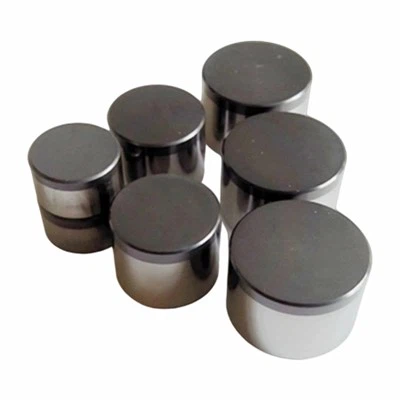
In resource exploration and development, and the processing of high-wear-resistant materials, operational efficiency and tool reliability are always the core factors restricting production capacity and cost.PDC tools (polycrystalline diamond composite tools), with their structural advantages combining the ultra-high hardness of the outer diamond layer with the good toughness of the underlying cemented carbide layer, have become key tools for dealing with high hardness, strong wear, and impact load conditions. However, the performance of a single tool cannot be fully realized without the support of a systematic solution. Only by organically integrating tool design, working condition matching, process optimization, and operation and maintenance management can the goals of high efficiency, stability, and economy be achieved.
The first step in PDC tooling solutions lies in accurate working condition analysis and tool selection. Different strata exhibit significant differences in rock hardness, abrasiveness, and drillability. Inappropriate selection can easily lead to abnormal wear or impact damage of the cutting teeth. By establishing a stratum characteristic model through geological data and historical operational feedback, the compressive strength, elastic modulus, and proportion of hard minerals in the target area can be clearly identified, allowing for the matching of appropriate diamond grain size, bonding phase type, and tooth profile structure. For example, in medium-soft to medium-hard sandstone and limestone formations with high abrasiveness, fine-grained diamond layers are preferable to improve wear resistance. However, in gravel-bearing or highly impact-laden formations, the focus should be on impact-resistant tooth design, achieved by thickening the cemented carbide matrix or optimizing the tooth facet angle to distribute loads.
Precise control of the manufacturing process is the technological cornerstone of the solution. Modern PDC tools employ a high-temperature, high-pressure (HPHT) sintering process, enabling diamond microparticles to form a dense and robust composite layer mediated by a bonding phase. By reducing catalytic metal residues or introducing ceramic or carbide-based non-metallic phases into the bonding phase system, thermal stability and impact fatigue resistance can be significantly improved, avoiding the risks of diamond graphitization and delamination during high-temperature drilling or high-speed cutting. Customized tooth geometry design is equally crucial, including optimization of the rake angle, clearance angle, crown profile, and chip flute morphology. This improves the cutting trajectory, reduces torque ripple, and enhances cuttings removal efficiency, thereby reducing secondary grinding wear.
Site-level solutions encompass drilling parameter optimization and real-time monitoring. Based on the formation drillability index and mechanical energy model, dynamic adjustments to rotation speed, drilling pressure, and pump displacement ensure rock-breaking efficiency while avoiding overload impact. Combined with a measurement-while-drilling (MWD) system and vibration and torque monitoring devices, the operating status of the cutting teeth can be captured in real time. Any abnormal load or temperature signals can trigger early warnings and prompt parameter reduction or drill string removal for inspection, preventing catastrophic failure. Furthermore, strategies for regrinding and reusing worn tools extend the overall service life and reduce consumable costs.
A closed-loop operation and maintenance management system is essential for the sustainable operation of the solution. Establishing tool usage records, documenting formation conditions, operating parameters, wear patterns, and failure modes, provides data support for subsequent tool selection and process iteration. Regular calibration of equipment coaxiality and clamping accuracy ensures stable tool installation and reduces localized load concentration caused by runout.
In summary, the PDC tool solution is not merely a collection of individual products, but a comprehensive system engineering project integrating formation adaptation, material and structural optimization, process control, on-site control, and data-driven management. It has achieved remarkable results in improving mechanical drilling speed, extending drilling life, and reducing non-productive time and overall costs, providing a reliable path for oil and gas drilling, geological exploration and high wear-resistant machining to cope with complex challenges, and will continue to be optimized and upgraded with the integration of intelligent and digital technologies.