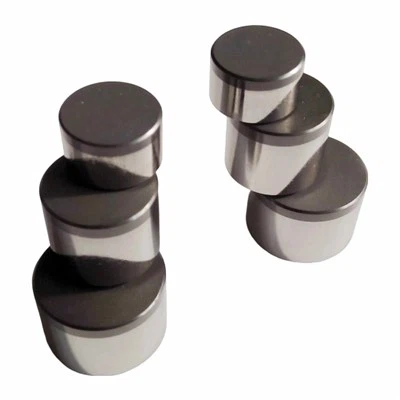
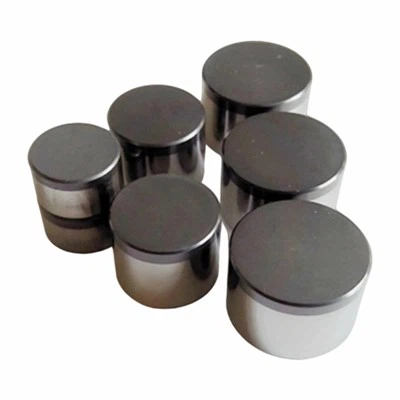
In extreme operating environments such as mining, tunneling, and deep-well drilling, the "teeth" of tunnel boring machines (TBMs)-cutters-undertake the frontline task of rock fragmentation. However, traditional WC-Co cemented carbide cutters often suffer from abrasive wear failure when encountering high-hardness rock formations. Frequent cutter replacements not only reduce penetration rates but also incur substantial downtime costs.
To overcome this bottleneck, polycrystalline diamond compact (PDC) cutters emerged. Yet, how to robustly bond the ultra-hard PDC layer to the tough steel substrate without compromising diamond's thermal stability? This article provides an in-depth analysis of an innovative PDC cutter (PCD PICK) brazing method, revealing how it achieves a "synergistic union."
I. Challenges of Traditional Brazing: Stress & Thermal Damage
A PDC cutter head (PCD PICK) comprises a sintered polycrystalline diamond layer bonded to a cemented carbide substrate. Conventional brazing typically employs overall induction heating, which presents two persistent challenges:
Residual Thermal Stress: Significant differences in thermal expansion coefficients and elastic moduli exist among the steel substrate, cemented carbide, and PDC layer. Post-cooling, accumulated interfacial stresses cause brittle fracture or chipping under impact loads.
PDC Thermal Degradation: Diamond (PCD layer) is highly sensitive; brazing temperatures exceeding 700°C drastically reduce its wear resistance and can induce graphitization, leading to premature failure.
II. Innovative Solution: Zn-Ni Pre-Plating & Gradient Composite Braze Joint
The new-generation brazing process introduces dual mechanisms: interface modification and stress regulation.
Zn-Ni Plating: The Art of Interface Alloying
Unlike direct brazing, this method adds a pre-treatment step: immersing the bonding surface of the cemented carbide substrate into molten zinc-nickel (Zn-Ni) alloy.
Function: Forms a Zn-Ni alloy layer, achieving "pre-braze alloying." This significantly enhances braze filler wetting on the substrate, ensuring complete coverage and eliminating lack-of-fusion defects. Simultaneously, Ni synergizes with the filler metal, elevating shear strength beyond 300 MPa.
Composite Flux: Creating a Thermal Expansion Gradient
The flux paste is innovatively blended with 10%~20% cemented carbide powder (e.g., WC-12Co).
Technical Principle: Cemented carbide powder has a low thermal expansion coefficient, while molten filler metal has a high coefficient. Their mixture forms a "composite material" with a moderate coefficient. This creates a gradient structure: "Steel substrate (High) → Composite braze joint (Medium) → Cemented carbide (Low)."
Benefit: Effectively reduces interfacial stress, preventing micro-cracks and porosity in the braze joint.

III. Core Process Flow Details
Efficient brazing relies not only on materials but also on precise thermal control.
Step 1: Substrate Preheating & Flux Application
Uniformly coat the inner hole of the steel substrate with the specialized flux paste containing WC-Co powder (dry thickness ~0.3-0.4mm). Place a silver-based filler metal sheet (54%-57% Ag) and inductively preheat to 670~690°C until the filler fully melts into a ready-to-braze state.
Step 2: PDC Head Thermal Protection & Plating
This step is critical for diamond protection. A dedicated copper tube fixture fully encloses the PDC cutter head's diamond layer.
Physical Heat Protection: Utilizes copper's excellent thermal conductivity for rapid heat dissipation.
Atmosphere Protection: Purge the tubular fixture with high-purity argon. This lowers oxygen partial pressure at the diamond surface (preventing oxidation) and carries away residual heat via gas flow.
Under this protection, immerse the cemented carbide end into the 650-680°C plating solution for ~40 seconds.
Step 3: Precision Induction Brazing
Insert the treated PDC head into the preheated steel substrate. Due to the copper fixture and argon flow, the actual temperature of the diamond layer remains safely below the 700°C threshold. When the braze joint exhibits a bright, liquid appearance, rotate clockwise 2-3 times to expel impurities. Cool to obtain a high-strength cutter.
IV. Performance Leap: Data-Driven Results
Comparative testing (e.g., Example 1 vs. Traditional Process Comparison 1) reveals remarkable improvements across core metrics:
|
Performance Metric |
Traditional Overall Induction |
Zn-Ni Pre-Plating + Composite Joint |
Performance Gain |
|
Braze Joint Shear Strength |
231.7 MPa |
315.8 MPa |
+36.3% |
|
Hard Rock Excavation Life |
130 hours |
265 hours |
+103.8% |
|
Microstructure |
Presence of lack-of-fusion, pores |
Dense bonding, uniform structure |
Significant Improvement |
This novel PDC cutter (PCD PICK) brazing technology successfully integrates microscopic interface alloying with macroscopic thermal protection. It resolves the persistent challenge of diamond thermal damage and perfectly mitigates thermal expansion mismatch between materials through the "gradient transition layer" concept.
For clients in mining and underground engineering, this translates to fewer downtime events for cutter changes, faster excavation rates, and lower overall costs. As hard rock challenges intensify, this robust welding innovation-truly "armoring the teeth"-represents the cutting-edge solution the industry urgently needs.