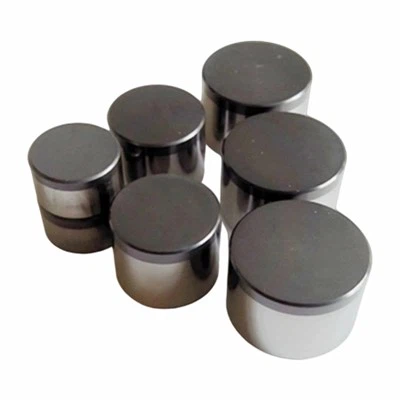
Thermoly stable PCD, short for Thermally Stable Polycrystalline Diamond, is a type of superhard composite material developed from traditional polycrystalline diamond (PCD) through a special process modification. This allows the diamond layer to maintain its original structure and properties even under high-temperature environments. Its initial development aimed to overcome the defect of ordinary PCD, which undergoes thermal activation under high-temperature conditions, leading to the transformation of diamond into graphite. This expands its application range in high-temperature, high-speed cutting, and demanding drilling applications.
Ordinary PCD is formed by sintering micron-sized diamond particles with metal catalysts (such as cobalt and nickel) under high temperature and pressure. The diamond particles form a continuous three-dimensional network structure under the action of the catalyst, thus possessing hardness and wear resistance close to that of natural diamond. However, the metal catalyst promotes the transformation of diamond into graphite at high temperatures (typically exceeding 700°C), causing a decrease in hardness, a reduction in wear resistance, and even structural disintegration, limiting the application of PCD in high-temperature environments such as high-speed cutting and deep well drilling. The breakthrough in thermally stable PCD lies in removing or passivating the harmful effects of metal catalysts. Common methods include high-temperature heat treatment of the composite sheet after synthesis (typically 600–850°C under an inert atmosphere), which promotes the precipitation of residual catalysts or their transformation into an inert phase. Simultaneously, a stable carbide interface layer is formed between diamond grains, inhibiting the graphitization process.
After this treatment, the diamond layer of thermally stable PCD can maintain its original crystal structure and mechanical properties at higher temperatures (generally withstanding short-term thermal shock at 700–850°C, with long-term stable operating temperatures exceeding 650°C), significantly delaying performance degradation caused by thermal activation. This characteristic gives it a significant advantage in high-speed milling, dry cutting, deep-well oil and gas drilling, and high-temperature geological drilling, not only improving tool life but also enhancing the safety and stability of the machining and drilling processes.
Structurally, thermally stable PCD retains the three-dimensional bonding network between diamond particles, and its macroscopic hardness and wear resistance are comparable to conventional PCD. However, due to reduced catalyst content or interface modification, its impact toughness may vary slightly, requiring appropriate selection based on operating conditions. In terms of manufacturing processes, thermally stable PCD has stricter requirements for synthesis parameters, heat treatment regimes, and subsequent processing precision, necessitating a balance between ensuring thermal stability and maintaining interfacial bonding strength and dimensional accuracy.
In summary, thermally stable PCD is an advanced composite material that allows polycrystalline diamond to maintain its ultra-hardness and wear resistance over a wider temperature range by inhibiting the catalytic graphitization reaction of metal catalysts at high temperatures. Its emergence not only expands the application boundaries of PCD but also provides crucial material support for efficient and reliable cutting and drilling under extreme high-temperature conditions, holding significant technical and economic importance in precision manufacturing and energy development.