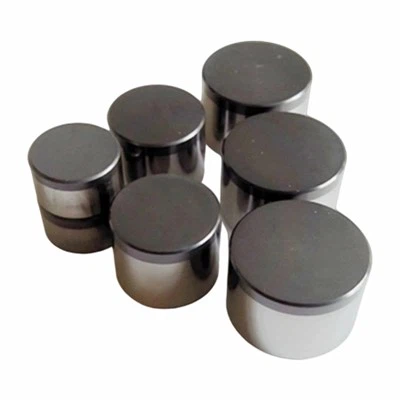
In the field of mining engineering, PDC (polycrystalline diamond composite) cutters have been widely used for many years, accumulating rich experience in field practice. This experience not only reveals the conditions for realizing their performance advantages but also clarifies the key to achieving stable and efficient rock-breaking effects under different mineral and rock environments and operating modes. Summarizing and applying this experience is of significant practical importance for improving the overall performance of drill bits, reducing operating costs, and ensuring construction safety.
Experience shows that precise matching of working conditions is a prerequisite for maximizing the effectiveness of PDC cutters. In homogeneous medium-hard sandstone, shale, and some limestone, their continuous shear rock-breaking mechanism can be fully utilized, resulting in significant increases in mechanical drilling rate and footage. However, in hard and brittle rocks or gravel-bearing interlayers, neglecting the matching of diamond layer thickness and matrix toughness can easily lead to edge chipping or premature wear. On-site, the specifications of the cutting tools are determined primarily based on core test data. In hard rock sections, a combination of thick diamond layers and a high-toughness matrix is preferred, with appropriate densification during deployment to resist impact and improve local penetration. This approach of "selecting materials according to site conditions and rock type" has been repeatedly verified to reduce unplanned replacements and improve drill bit utilization.
Coordinated control of deployment and drilling parameters is another important experience. The arrangement of multiple cutting tools at the drill bit crown must balance cutting coverage and load distribution. Radial or spiral arrays must match the hole diameter, depth, and trajectory requirements to avoid vibration and hole deviation caused by uneven loading. Drill pressure and rotation speed settings should not be blindly pursued at high values; they need to be fine-tuned based on the drillability index of the rock and the cutting tool's exit height: for soft rock, the rotation speed can be moderately increased to accelerate cutting, while for hard rock, drill pressure should be controlled to prevent overload impact. Experience shows that a stable parameter range combined with real-time torque and temperature change monitoring can effectively delay thermal damage to the diamond layer and matrix fatigue.
In terms of operation and maintenance and process tracking, mining companies generally establish regular inspection and data backtracking mechanisms. By observing the wear pattern on the cutter surface, the integrity of the diamond layer, and the condition of matrix cracks, combined with changes in drilling footage and drilling speed, the remaining lifespan can be determined, allowing for advance arrangements for replacement or repair to avoid sudden failures impacting the project schedule. Archiving and analyzing the lithology records, parameter settings, and cutter status of each operation allows for the gradual establishment of selection and deployment optimization models suitable for the specific characteristics of the mining area, achieving the systematization and transferability of experience.
Furthermore, the experiential understanding of comprehensive cost and safety benefits is also worth emphasizing. Although PDC cutters have a higher initial investment, their high wear resistance and long lifespan can significantly reduce material and energy costs per unit of drilling footage and shorten non-productive time under medium-hard rock conditions. Their smooth shearing cutting reduces drill bit vibration, contributing to borehole stability and subsequent support operations, indirectly improving the operational safety factor. In practice, their appropriate use in combination with roller cone drill bits in hard rock sections can create complementary advantages, balancing efficiency and reliability.
In summary, the experience gained from using PDC cutters in mining engineering has been distilled into a practical chain of "precise matching of working conditions-coordinated parameter control-operation and maintenance tracking optimization-comprehensive benefit coordination." These insights and methods, derived from on-site experience, not only guide the efficient implementation of current operations but also provide a valuable empirical foundation for the promotion of new technologies and the mining of complex ores.