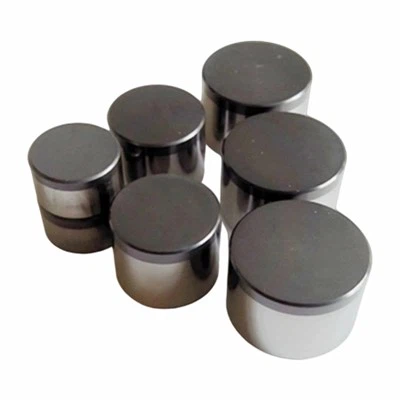
Thermal stable polycrystalline diamond (PCD) is a core tool material in high-end manufacturing, and its performance stability directly affects machining quality and production efficiency.Because the material's synthesis and subsequent processing can be affected by differences in compositional distribution, interfacial bonding strength, and thermal stability treatments, establishing a scientific and rigorous testing process is essential to ensure its compliance with application requirements. A complete testing process not only identifies potential defects but also provides data support for subsequent process improvements.
Inspection typically begins with an initial visual inspection. Using a stereomicroscope or high-resolution imaging system, the tool surface is visually inspected, focusing on the presence of obvious cracks, chipping, coating peeling, and foreign matter adhesion. This step aims to eliminate visually perceptible manufacturing defects and define the range for subsequent precision measurements.
Subsequently, geometric dimensions and form and position tolerances are checked. Using a high-precision coordinate measuring machine or digital micrometer, key dimensions such as the cutting edge radius, total tool length, and mounting hole positions are checked item by item to ensure compliance with design specifications. For cutting tools that require maintaining a specific cutting edge profile, profile scanning should be performed to verify the fit with the design model, thus avoiding the accumulation of machining errors caused by dimensional deviations.
Microstructure and phase composition analysis are core steps in evaluating thermal stability. Scanning electron microscopy (SEM) is used to observe the arrangement and grain boundary characteristics of diamond grains, combined with energy dispersive spectroscopy (EDS) to confirm the uniformity of elemental distribution, which can determine whether the sintering process is sufficient and the quality of interfacial bonding. X-ray diffraction (XRD) is used to detect the retention of the diamond phase, ensuring that no significant graphitization peaks appear after thermal stability treatment, thereby verifying the structural reliability of the material at high temperatures.
Thermal performance testing is an important step in verifying its temperature resistance. Differential scanning calorimetry (DSC) or high-temperature friction and wear tests can be used to determine the thermal decomposition onset temperature and wear resistance retention rate of the material under specific heating rates and load conditions, quantifying its thermal stability performance in actual working conditions. For cutting tools that need to withstand impact loads, impact toughness testing can also be used to evaluate the synergistic level of thermal stability and mechanical toughness.
Finally, the test results must be compiled and judged to form a traceable test report, and rework or scrapping plans must be formulated for non-conforming items. This standardized testing process not only improves the quality controllability of the thermal stability PCD, but also provides a solid guarantee for users' safe use in harsh processing environments.