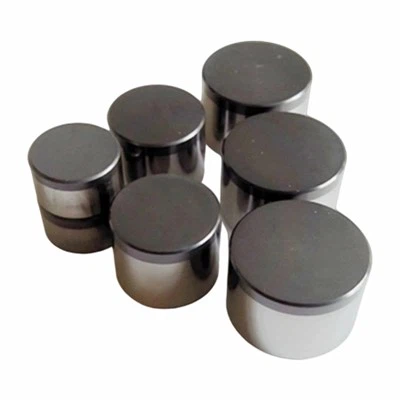
Thermo-stable polycrystalline diamond (PCD) holds a crucial position in high-end manufacturing due to its unique working principle. While maintaining the extremely high hardness and excellent wear resistance of diamond, it effectively suppresses performance degradation caused by high temperatures through material and structural optimization, thus maintaining stable cutting capabilities under high temperature, high speed, and complex load conditions.
The basic structure of PCD consists of a large number of diamond microparticles sintered under high temperature and pressure under the action of a bonding phase to form a three-dimensional network structure. Diamond is the hardest known natural material, and its carbon atoms are tightly connected by strong covalent bonds, giving PCD excellent wear resistance and deformation resistance. However, the metallic bonding phases (such as cobalt and nickel) in conventional PCD have a catalytic effect at high temperatures, causing diamond to transform into graphite, leading to a sharp drop in hardness and tool failure. One of the core principles of the working principle of thermally stable PCD is to block or delay the thermal decomposition process of diamond by reducing the content of catalytic metals or replacing them with non-catalytic bonding phases such as ceramics and carbides, allowing the material to withstand temperatures above 700℃ without significant phase transformation. Building upon this foundation, thermally stable PCD tools also rely on optimized microstructure design to enhance thermal stability and mechanical toughness. The size and distribution of diamond grains are precisely controlled, ensuring strong grain boundary bonding while avoiding weak surfaces due to excessively coarse grains or reduced macroscopic strength due to excessively fine grains. A rationally designed grain boundary network can disperse thermal stress and mechanical impact, reducing damage caused by localized high-temperature concentrations. Simultaneously, post-processing techniques (such as high-temperature vacuum annealing) can deactivate or migrate residual catalytic metals to non-critical areas, thereby reducing the tendency for graphitization at high temperatures and improving the overall oxidation resistance and thermal fatigue resistance of the material.
During operation, thermally stable PCD tools generate a significant amount of heat during cutting, especially when machining high-silicon aluminum alloys, high-temperature alloys, and composite materials, where the cutting zone temperature is often high. Thanks to its high thermal stability and low coefficient of thermal expansion, the tool can maintain dimensional and shape stability in high-temperature environments, reducing machining errors caused by thermal deformation. Furthermore, the covalent bond structure of the diamond phase remains robust at high temperatures, keeping the cutting edge sharp and slowing down the wear process. This combination of hardness, wear resistance, and structural integrity at high temperatures is the fundamental reason why thermally stable PCD can continuously and efficiently cut under harsh conditions.
In short, thermally stable PCD achieves the long-term maintenance of diamond's excellent mechanical properties in high-temperature environments through the synergistic effects of material modification, microstructure optimization, and post-processing. Its working principle reflects a high degree of fit between material design and processing requirements, providing reliable support for precision manufacturing under extreme conditions.